
Insider Brief
- Dcubed has received a €1.3 million contract from the European Space Agency to develop LARA (Lightweight Antenna with Rollable Array), a scalable, deployable antenna system for next-generation satellite communications.
- The project aims to create a 5 m² aperture antenna for L- or S-band operations, featuring rollable, passive mechanical deployment elements optimized for mass production and high-performance RF capabilities.
- By focusing on serial manufacturability and leveraging its heritage in origami-based space structures, Dcubed will serve as the sole contractor, integrating RF design and mechanical systems to support the growing demand for low-cost, high-gain communication payloads across the European space sector.
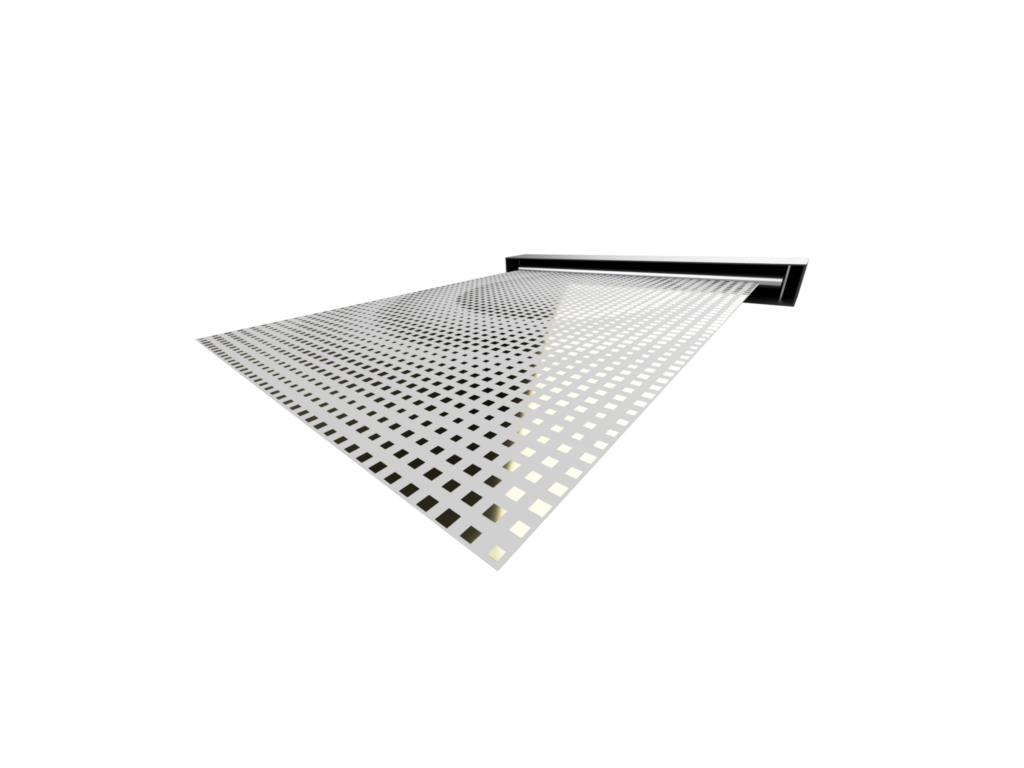
PRESS RELEASE – Dcubed has taken another bold step forward in deployable space structures with the award of a €1.3 million contract from the European Space Agency to develop a new class of rollable satellite antennas. The project, called LARA (Lightweight Antenna with Rollable Array), will result in a 5 m² reflectarray or transmit-array system designed for easy deployment, mass production, and next-gen performance in orbit.
A New Chapter for Space Communications
Satellite operators are facing soaring demand for high-gain, direct-to-device services and agile Earth Observation capabilities. But the current generation of deployable antennas often relies on bulky, complex mechanisms—great for prototypes, not so great for scaling up.
That’s where LARA comes in. Leveraging Dcubed’s proven rollable and origami-inspired designs, LARA will offer a lighter, simpler, and far more scalable alternative to traditional antenna systems. The design draws on heritage from Dcubed’s Origami Solar Arrays, Reflect Array and ISM Solar Array projects, but transitions the focus from solar energy to radio frequency (RF) communication, while continuing the shift from rigid to rollable surfaces.
Small in the Rocket, Big in Space
The planned antenna will feature an aperture of at least five square meters and operate in the L- or S-band—potentially even higher frequencies, depending on mission needs. It will be built around a passive mechanical deployment system using rollable elements.
Just as importantly, LARA includes development of a complete manufacturing and assembly process optimized for serial production. This is not just a one-off demonstrator—it’s the foundation for scalable product lines that can be built and deployed quickly, reliably, and at lower cost.
A Fully Integrated Approach
As the project’s prime and sole contractor, Dcubed will leverage its in-house mechanical engineering, RF design, and deployment systems expertise, enabling faster progress from concept to test article to flight hardware. This approach also streamlines iteration and testing, which is crucial for deployables that need to perform perfectly—once and only once—in orbit.
This contract is a milestone not just for Dcubed, but for European space autonomy. As NewSpace accelerates, scalable infrastructure will be essential. Dcubed’s in-space manufacturing expertise—and deep collaboration with DLR Raumfahrtmanagement and ESA—are critical pieces of that puzzle.