
Insider Brief: Dawn Aerospace Launches Commercial Spaceplane Sales
- Dawn Aerospace has opened sales of its Aurora spaceplane, the first commercially available vehicle designed to reach space via horizontal runway launch, with first deliveries expected in 2027.
- Aurora combines rocket propulsion with aircraft reusability, enabling multiple daily flights to the edge of space from standard runways; the vehicle is designed for high-frequency suborbital missions across research, defense, and commercial sectors.
- Capable of reaching altitudes up to 100 km and speeds of Mach 3.5, Aurora supports payloads up to 10 kg and delivers microgravity access for up to three minutes, offering new capabilities for atmospheric research, hypersonic testing, and semiconductor and life sciences R&D.
A commercial spaceplane capable of reaching the edge of space is now for sale.
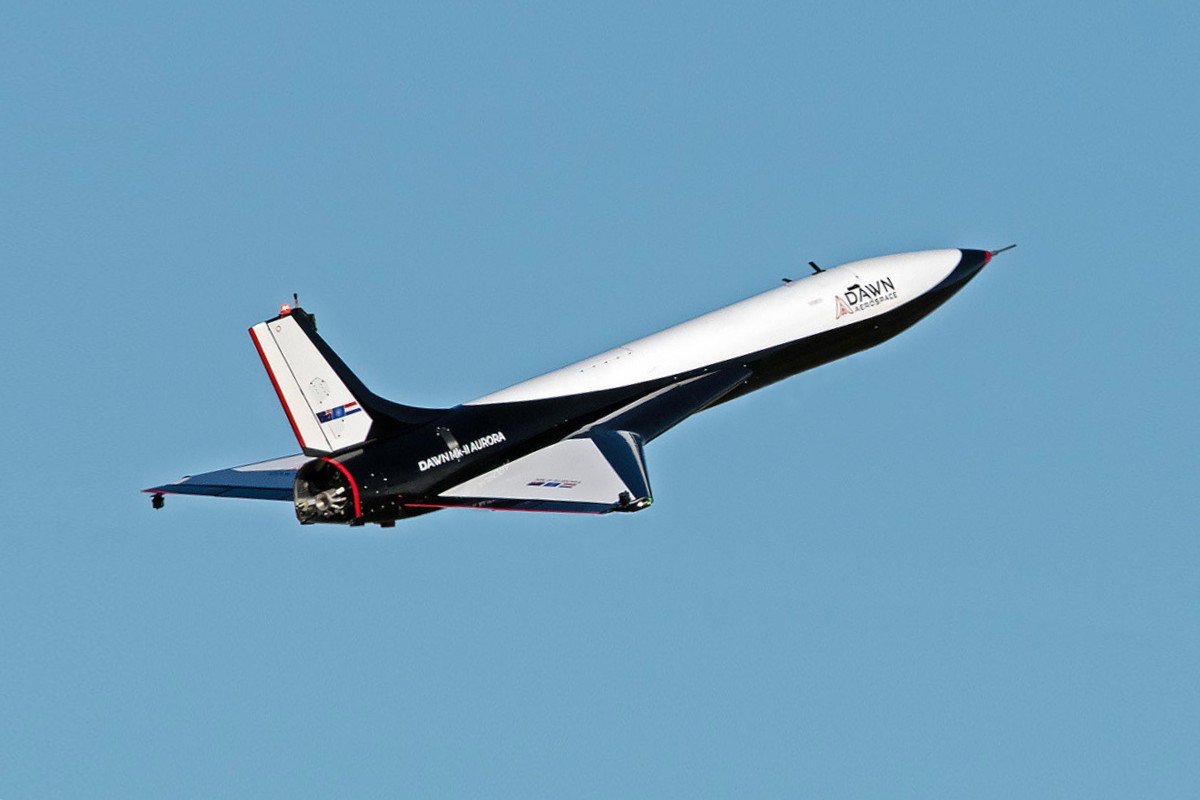
Dawn Aerospace has announced that its Aurora spaceplane will be available for customer deliveries in 2027, making it the first space-capable vehicle designed to cross the Kármán line—the widely accepted boundary of space at 100 kilometers altitude—to be offered for direct purchase. Aurora combines rocket-level performance with conventional aircraft operability, including runway takeoff and landing, enabling rapid, repeated suborbital flights.
“For the first time, customers have the opportunity to own an aircraft capable of reaching the edge of space,” Stefan Powell, CEO of Dawn Aerospace, said in a statement. “Aurora is a game-changing platform for governments, spaceports, and new spaceplane operators to access extreme altitudes and deliver vital services and programs. It’s been over a century since commercial airlines began—now it’s time to launch the first spaceline.”
According to the New Zealand company, Aurora introduces a new operational model in the aerospace sector, where government and commercial customers can purchase and independently operate their own spaceplanes. Unlike legacy systems that require large-scale infrastructure and significant launch preparation, Aurora offers a fast turnaround time of under four hours, allowing multiple missions per day from conventional runways. The vehicle’s bi-propellant propulsion system enables speeds up to Mach 3.5 and altitudes of 100 kilometers, with microgravity windows of up to three minutes.
The vehicle has already demonstrated performance capabilities in a series of test flights. On its 57th flight in November 2024, Aurora reached supersonic speeds, Mach 1.12, and climbed to 82,500 feet / 25.1 km. That set the record for the fastest climb from runway to above 20km, breaking a five decade record previously held by the modified F-15 Streak Eagle.
Aurora says it is positioned to support a wide range of missions. In life sciences, it offers a platform for regenerative medicine and space health research under microgravity conditions. In semiconductor development, the system provides access to near-space environments for materials testing under extreme thermal and radiation stress. Defense and surveillance agencies can use Aurora to validate payloads, conduct high-altitude reconnaissance, and evaluate new sensing systems.
Key specifications include a 10-kilogram payload capacity, customizable trajectory, and a range of up to 130 kilometers. Its reusability, rapid refueling capabilities, and operational simplicity make it suitable for both traditional spaceports and emerging aerospace hubs.
Dawn Aerospace is coordinating initial deliveries with research institutions, government agencies, and commercial spaceplane operators. The company, which operates under certifications from New Zealand’s Civil Aviation Authority and Space Agency, expects Aurora to become a cornerstone of a new generation of high-frequency suborbital platforms.
Aurora Spaceplane – Key Specifications
- Maximum Altitude: 100 km (328,000 ft)
- Top Speed: Mach 3.5 (2,270 mph)
- Turnaround Time: <4 hours (enabling multiple daily flights from standard runways)
- Payload Capacity: Up to 10 kg (22 lbs.)
- Propulsion System: Bi-propellant rocket engine
- Microgravity Duration: Up to 3 minutes
- Trajectory: Customizable
- Maximum Range: 130 km (80.8 miles)