
Insider Brief
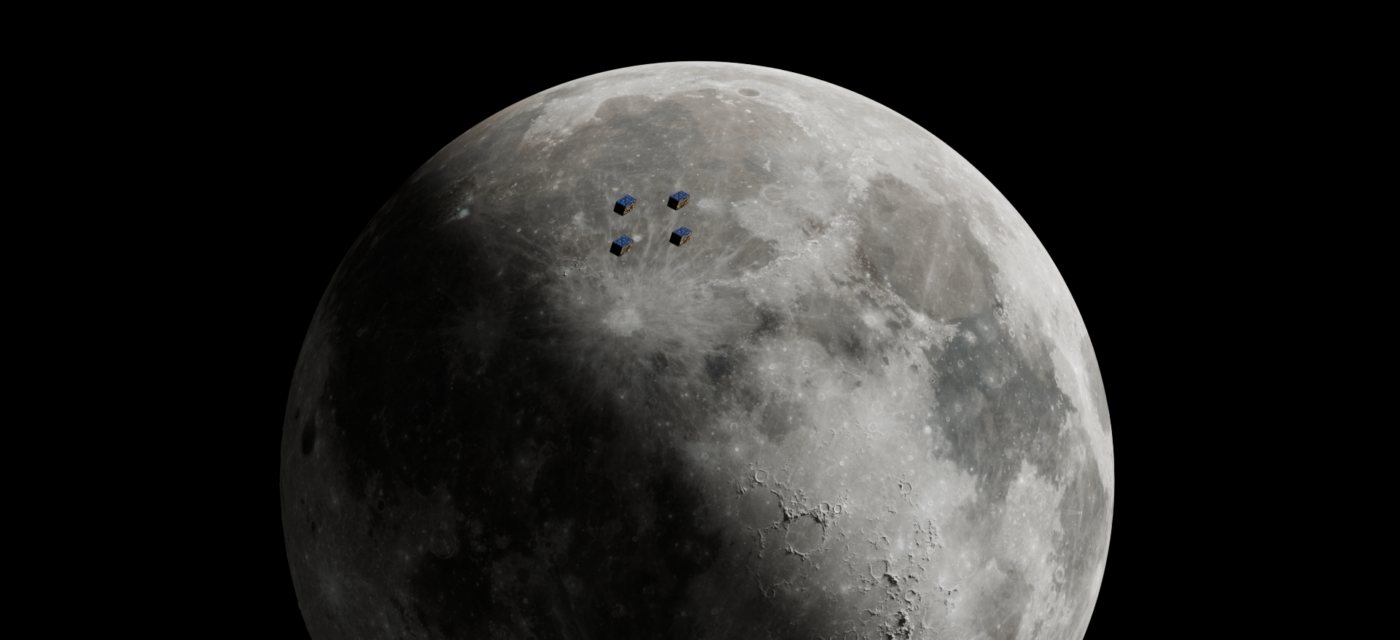
- Blue Skies Space has secured a contract from the Italian Space Agency (ASI) to design a fleet of CubeSats that could orbit the Moon and detect faint radio signals from the early universe.
- Named RadioLuna, the mission aims to use the radio-quiet far side of the Moon to study the universe’s “dark ages,” a period before stars formed, by detecting low-frequency radio emissions obscured on Earth by man-made interference.
- The study will assess the feasibility of using simple, cost-effective CubeSats with commercial components, with Blue Skies Space Italia leading the project and OHB Italia defining the satellite platform for lunar orbit operations.
PRESS RELEASE – Blue Skies Space, a leader in the provision of space science data to the global research community, has secured a contract from the Italian Space Agency (ASI) to design a fleet of satellites that could orbit the Moon and map the early universe.
The project, named RadioLuna, aims to uncover whether a fleet of small satellites in a lunar orbit could detect faint radio signals from the universe’s earliest days—signals that are nearly impossible to pick up on Earth due to man-made radio interference. These signals, in the FM radio range, come from a time before the first stars formed, when the universe was mostly hydrogen gas. By listening from the far side of the Moon, free from Earth’s radio noise, scientists could use the satellites to uncover a missing piece of the puzzle in our understanding of the cosmic “dark ages.”
Dr Marcell Tessenyi, CEO and Co-founder of Blue Skies Space, said: “The idea for this project stemmed from the global efforts to develop the lunar economy. Programmes by space agencies such as ESA Moonlight or NASA Artemis can provide the transport, communication and timing infrastructure to projects such as RadioLuna. We are grateful to the Italian Space Agency for funding this activity with our project partner OHB Italia to explore novel ways of delivering exciting science.”
The study will establish the viability of operating simple and cost-effective CubeSats equipped with commercial off-the-shelf (COTS) components orbiting the Moon and will be led by Blue Skies Space Italia S.r.l., a subsidiary of UK-based Blue Skies Space Ltd. Project partner OHB Italia will be responsible for the definition of a viable platform in a Moon orbit.
“RadioLuna is a challenge where scientific ambition meets engineering pragmatism,” stated Roberto Aceti, Managing Director of OHB Italia. “We are proud to contribute to the development of an observatory that could open new frontiers in our understanding of the early universe, bringing to the mission our expertise and our M3 platform.”
Dr Tessenyi continued: “We started Blue Skies Space to capitalise on the changes brought by the NewSpace economy. RadioLuna is an excellent opportunity to showcase the benefits these bring to science.”