
Insider Brief
- Spire Global successfully established a two-way optical link between two satellites, improving the speed, reliability, and security of space-based data transmissions.
- The satellites, launched in June 2023, use optical inter-satellite link (OISL) technology to transmit data securely and almost instantaneously across distances of up to 5,000 kilometers.
- Supported by the European Space Agency and UK Space Agency, Spire plans to launch three additional satellites with OISL technology in 2025 to enhance its space data services.
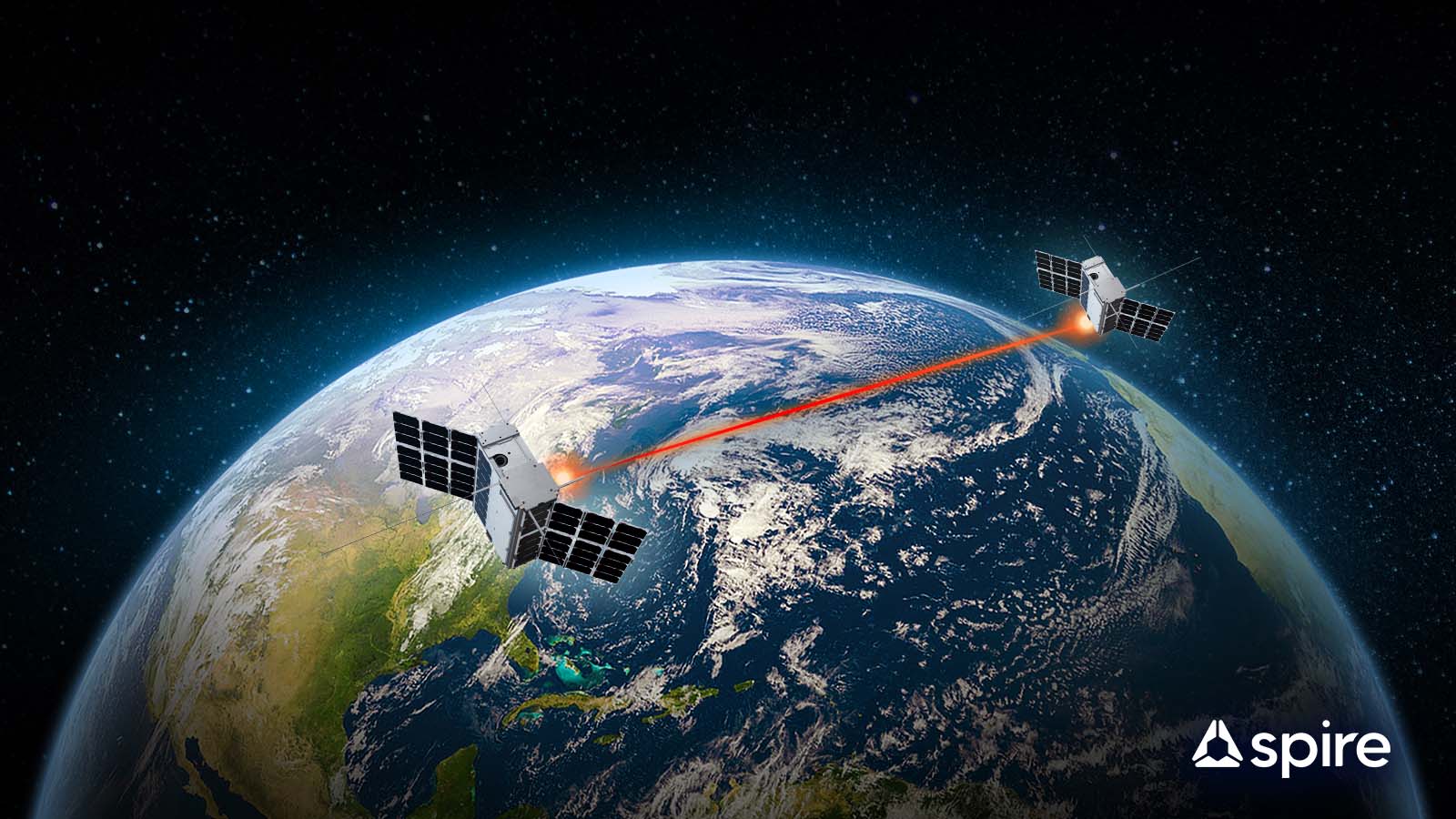
PRESS RELEASE — — Spire Global, Inc. (NYSE: SPIR) (“Spire” or “the Company”), a global provider of space-based data, analytics and space services, successfully established a two-way optical link between two satellites in orbit. This achievement marks a major step toward enhancing the speed, reliability, and security of data transmissions for future missions.
The satellites, which launched in June 2023, are equipped with optical inter-satellite link (OISL) payloads. The payloads create lasers that send information back and forth between satellites, securely and almost instantaneously, while up to 5,000 kilometers apart. This technology has the ability to enhance applications such as weather forecasting, global communications, and remote sensing for navigation and environmental monitoring by increasing data speeds, enhancing security and reducing data latency.
 “Precisely pointing two satellites, across distances equivalent of New York to London, and establishing an inter-satellite optical link is a significant milestone for Spire,” said John E. Ward, Senior Director of Research & Development at Spire Global. “This achievement places us among a select group of organizations capable of developing and deploying this advanced technology and overcoming the complexities of aligning satellites separated by thousands of kilometers in Low Earth Orbit. Integrating this technology into our future fleet will enhance resilience, improve security, and reduce latency for critical applications.”
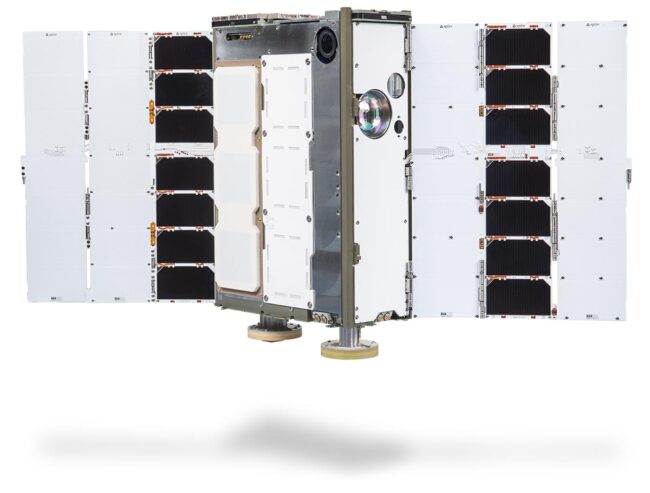
“We have shrunk what is typically a large optical system—the size of a microwave—down to the size of a tissue box,” added Thomas Carroll, Team Lead – Applied Optics Team, Spire. “Our OISL payload is the smallest on the market, allowing us to deploy this technology on our small satellites while delivering performance previously achievable only with much larger systems. This breakthrough has the potential to enhance our data and Space Services solutions, especially for applications that require continuous coverage with fast and secure data relay.”
The development of the OISL technology was supported by a European Space Agency (ESA) Advanced Research in Telecommunications Services (ARTES) Pioneer Partnership Project, within ESA’s Connectivity and Secure Communications directorate, with funding from the UK Space Agency (UKSA).
“Through our ARTES Pioneer Partnership Project, we have supported Spire in the development of a new OISL capability for their space data service network,” said Clive Edwards, ESA Pioneer Implementation Manager. “This OISL system is set to transform satellite communications, offering enhanced security and efficiency for space-based data transmission.”
Following the successful demonstration, Spire will launch three additional LEMUR satellites with OISL technology in 2025, two of which are set to launch via Exolaunch on the Transporter-13 rideshare mission with SpaceX.
During the mission, Spire will also launch four additional LEMUR satellites to replenish its fully deployed constellation and enable missions for its Space Services customers. The launch is scheduled for no earlier than March 2025. For updates on the launch, follow Spire on LinkedIn, X or Bluesky.