
Insider Brief
- ATMOS Space Cargo has confirmed that its PHOENIX re-entry capsule will undergo its inaugural test flight to Low Earth Orbit (LEO) in April 2025, as part of the Bandwagon-3 rideshare mission with SpaceX.
- The capsule will complete two orbits around Earth before attempting a controlled atmospheric re-entry.
- The primary objective of the PHOENIX 1 prototype’s test flight is to gather crucial data on the capsule and its innovative Inflatable Heat Shield. The prototype will not survive re-entry but is expected to provide valuable flight data that will help refine future iterations of the platform.
ATMOS Space Cargo, a European space logistics startup, has confirmed that its PHOENIX re-entry capsule will undergo its inaugural test flight to Low Earth Orbit (LEO) in April 2025, as part of the Bandwagon-3 rideshare mission with SpaceX. The capsule will complete two orbits around Earth before attempting a controlled atmospheric re-entry.
In January 2025, ATMOS received approval from the Federal Aviation Administration (FAA) for the PHOENIX mission, marking the company as the first private European entity authorized to attempt space re-entry.
The primary objective of the PHOENIX 1 prototype’s test flight is to gather crucial data on the capsule and its innovative Inflatable Heat Shield. The mission will focus on three key goals: collecting in-flight data from the capsule and its components in orbit, obtaining scientific data from customer payloads like technology demonstrators and biological experiments, and ensuring the successful deployment of the heat shield during re-entry. The prototype will not survive re-entry but is expected to provide valuable flight data that will help refine future iterations of the platform.
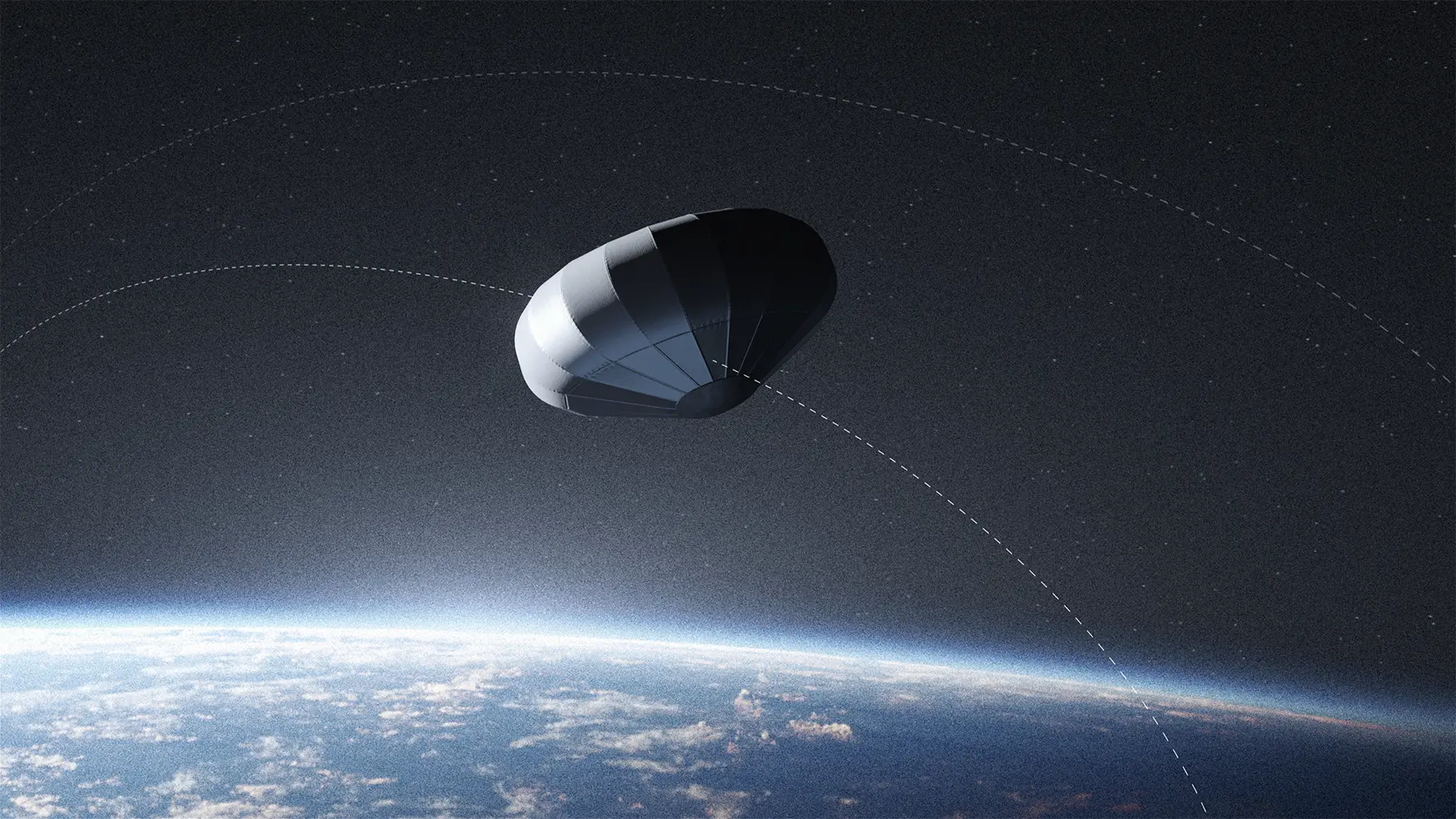
The PHOENIX capsule stands out due to its pioneering Inflatable Heat Shield, which inflates in orbit to decelerate the spacecraft as it re-enters Earth’s atmosphere. This unique technology enables the capsule to withstand the extreme heat generated by orbital re-entry and safely land without the need for parachutes. With a payload capacity of 100 kg in its initial version, the PHOENIX system has the potential to carry larger payloads, including rocket stages, in future models. The platform is designed to serve a variety of commercial sectors, including life sciences, biotechnology, and in-space manufacturing, with a focus on reducing downmass costs and improving mission efficiency.
The first test flight will also carry several diverse payloads, including radiation detectors for space missions and space laboratories for biological and life science experiments. Notable customers include the German Aerospace Center (DLR), the Japan-based IDDK, and the UK’s FRONTIER SPACE, all of which are developing groundbreaking technologies for microgravity research.
Image credit: ATMOS Space Cargo