
Insider Brief
- Amazon will launch its first full batch of 27 Kuiper satellites on April 9 aboard a ULA Atlas V rocket, marking a major milestone toward its goal of building a global satellite broadband network.
- The KA-01 mission follows a 2023 prototype flight and initiates deployment of a planned 3,200-satellite constellation aimed at providing fast, low-latency internet to underserved communities worldwide.
- With a launch schedule exceeding 80 missions, including flights with ULA, Blue Origin, Arianespace, and SpaceX, Amazon expects to begin customer service later this year, with U.S. lawmakers highlighting the project’s economic and connectivity benefits.
Amazon is set to launch its first full batch of internet satellites on April 9, marking a key milestone in the company’s push to build a global satellite broadband network.
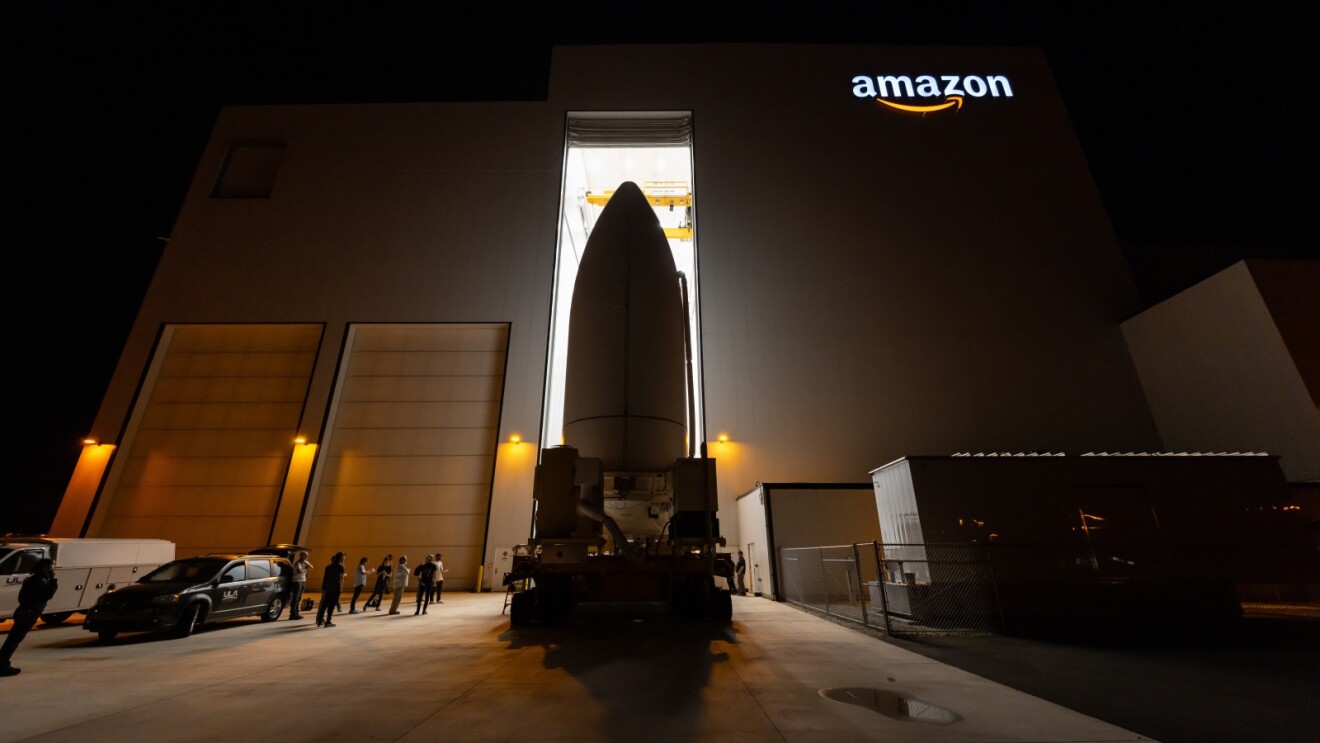
The mission, known as Kuiper Atlas 1 (KA-01), will lift off aboard a United Launch Alliance Atlas V rocket from Cape Canaveral Space Force Station in Florida. If successful, it will deploy 27 of Amazon’s Kuiper satellites into low Earth orbit at an altitude of 280 miles. The launch window opens at 12 p.m. EDT.
According to Amazon, Project Kuiper aims to deliver fast, low-latency internet to underserved communities around the world using a constellation of more than 3,200 satellites. The program follows a successful prototype flight in October 2023 and is expected to begin providing service to customers later this year.
“We’ve designed some of the most advanced communications satellites ever built, and every launch is an opportunity to add more capacity and coverage to our network,” said Rajeev Badyal, vice president of Project Kuiper. “We’ve done extensive testing on the ground to prepare for this first mission, but there are some things you can only learn in flight, and this will be the first time we’ve flown our final satellite design and the first time we’ve deployed so many satellites at once. No matter how the mission unfolds, this is just the start of our journey, and we have all the pieces in place to learn and adapt as we prepare to launch again and again over the coming years.”
Each satellite includes upgraded systems from the earlier prototypes, including improved antennas, processors, solar arrays, propulsion systems, and optical links to enable satellite-to-satellite communication. Amazon said it has also added a unique mirror coating to reduce visibility from Earth and address astronomers’ concerns about space clutter.
The KA-01 satellite payload is the heaviest ever launched by ULA’s Atlas V rocket. To handle the weight, ULA will fly the rocket in its most powerful configuration: five solid boosters, a main booster, and a 77-foot payload fairing. The launch will be streamed on ULA’s “Kuiper 1” mission page, with coverage beginning 20 minutes before liftoff.
After launch, the Kuiper satellites will begin automated steps to activate onboard systems and raise their orbit to 392 miles. Traveling at more than 17,000 miles per hour, the satellites will circle Earth every 90 minutes.
Once in position, they will form the backbone of Amazon’s satellite internet network. The system is designed to route data from the internet, through Amazon’s ground stations, to the satellites, and down to user terminals on the ground. Data can also flow in the opposite direction.
“Launch is only the first step in the months-long KA-01 mission,” Amazon said in a statement. ULA will oversee the initial deployment, while Amazon’s mission operations center in Redmond, Washington, will manage the satellite network.
The KA-01 launch is the first of more than 80 planned missions to build out the Kuiper constellation. Future launches will include seven additional Atlas V flights and 38 on ULA’s new Vulcan Centaur rocket. Other launches will come from Blue Origin, Arianespace, and SpaceX.
U.S. Senator Maria Cantwell (D-Washington) and other lawmakers have praised Project Kuiper for creating jobs in the Puget Sound region and helping bridge the digital divide, the company noted. Amazon has described the program as a way to bring reliable connectivity to areas where traditional broadband is unreliable or unavailable.
“We like to say we’re the Silicon Valley of space here in Puget Sound, and Kirkland now is joining the fight and helping us deliver not just better service, but a skilled workforce,” Sen. Cantwell was reported as saying at the facility opening in 2024.
The next mission, KA-02, is already in motion. Like its predecessor, it will fly on an Atlas V rocket from Cape Canaveral. Amazon has begun shipping and processing satellites for that launch as it ramps up toward commercial service.