Insider Brief
- NASA astronauts Barry “Butch” Wilmore and Sunita “Suni” Williams are assisting Boeing in analyzing technical failures after their Starliner mission extended from eight days to 286 due to spacecraft issues.
- The astronauts remained on the ISS after NASA deemed Starliner’s propulsion and parachute systems too risky for crewed return, opting to bring them home via SpaceX’s Crew Dragon.
- Both astronauts said they would fly aboard Starliner again, as NASA and Boeing aim to apply lessons from the flight to future commercial crew missions.
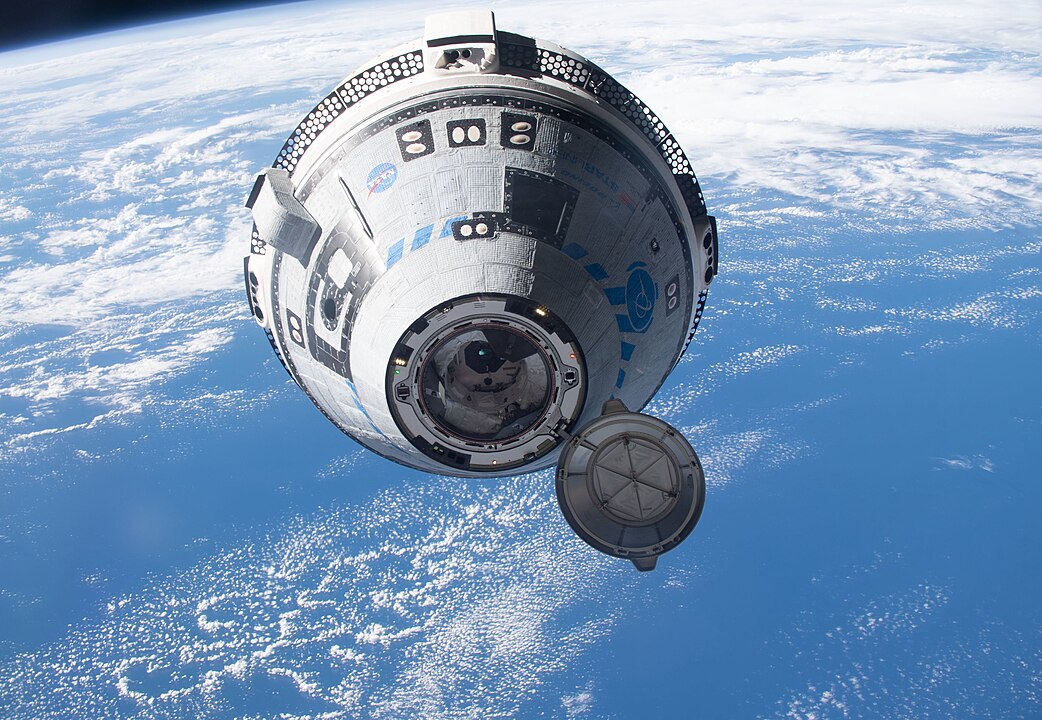
- Image: By NASA, Johnson Space Center, Public Domain
Two NASA astronauts who returned to Earth after a mission that stretched more than nine months due to problems with Boeing’s Starliner capsule are now working with engineers to identify what went wrong and how to fix it.
Barry “Butch” Wilmore and Sunita “Suni” Williams were originally scheduled to spend just over a week aboard the International Space Station. Instead, they spent 286 days in orbit after propulsion system failures and parachute concerns rendered their planned return vehicle, Boeing’s CST-100 Starliner, unfit for crewed reentry, according to Aviation Week.
The astronauts are now back on Earth, undergoing medical readjustment and preparing for a debrief with Boeing starting April 2. The flight was the first time humans rode Boeing’s Starliner spacecraft, which is intended to serve as a commercial crew transport vehicle alongside SpaceX’s Crew Dragon. Wilmore served as mission commander.

“I will start with me,” Wilmore said at a March 31 press conference at NASA’s Johnson Space Center.There are questions as commander of the spacecraft I should have asked and I did not. Maybe you can call that hindsight, but I will start somewhere by blaming me. I should have asked some questions, and the answers to those questions could have turned the tide. All up and down the chain, we [are] all responsible.”
Launched on June 5, 2024, the Crew Flight Test was meant to be a short-duration mission to certify Starliner for regular flights. Once docked at the ISS, however, Wilmore and Williams worked with ground teams to troubleshoot a series of malfunctions, including issues with the capsule’s reaction control thrusters and worries about whether its parachute system would function correctly during descent.
As reported by Aviation Week, NASA decided by September that Starliner should return to Earth without its crew to minimize risk. The spacecraft deorbited in an uncrewed configuration and landed in New Mexico. Wilmore and Williams stayed aboard the ISS, integrating into the station’s crew and taking part in ongoing research and maintenance operations for months longer than expected.
Departed Via Dragon Spacecraft
The astronauts’ presence allowed NASA to maintain normal station operations while buying time to coordinate a safe return, according to the magazine. That ultimately came via a SpaceX Crew Dragon spacecraft, which launched on Sept. 28 with two empty seats. The astronauts splashed down safely near Tallahassee on March 18, 2025, with NASA astronaut Nick Hague commanding the return flight.
“It’s dynamic. It’s challenging. We find a way to make it work,” Hague said at the press briefing, reflecting on the international crew’s ability to adapt amid shifting timelines.
Williams emphasized that the mission’s challenges also led to valuable scientific contributions.
“I’m very thankful,” she said, adding, “What we do up there is really awesome.”
She said that the extended time in space allowed her and Wilmore to assist with deep-space exploration research that supports missions to the Moon and Mars.
Despite the technical failures, both astronauts said they would fly on Starliner again.
“We are not going to look back and say this happened, that happened, that person is to blame,” Wilmore said, as reported by Aviation Week. “We are going to look forward and say what do we need to do, what are the lessons learned over the whole process and make sure that we are set for the future. This is a tough business. We are going forward.”
Their comments suggest NASA and Boeing are focused not only on correcting Starliner’s performance but also on maintaining confidence in its long-term viability. The CST-100 is still expected to become a second crew transport vehicle for the ISS, giving NASA more flexibility and redundancy.
Incorporate Lessons
According to Aviation Week, the Starliner team plans to incorporate lessons from the flight and the astronauts’ firsthand experience into design and software updates. The next crewed Starliner flight, part of the spacecraft’s operational certification, remains unscheduled pending the outcome of the ongoing analysis.
Both astronauts have extensive spaceflight experience. Wilmore, a U.S. Navy test pilot selected by NASA in 2000, has logged 464 days in space across three missions and five spacewalks. Williams, also a Navy aviator, has now spent 608 days in orbit and completed eight spacewalks, making her one of NASA’s most experienced astronauts.
Their extended stay is one of the longest NASA crewed missions. Five American astronauts have flown longer, including Frank Rubio, who holds the U.S. record for the longest single spaceflight at 371 days.
With Starliner’s performance under review, NASA’s Commercial Crew Program finds itself again dependent on SpaceX’s Dragon capsules for U.S.-based astronaut transport to and from the ISS. While no timetable has been announced for Starliner’s next mission, officials have emphasized that flight will not proceed until all safety concerns are resolved.
For now, NASA and Boeing are focused on the post-mission debrief.
“It goes with space exploration. That is what we are all about,” Williams said.