Insider Brief
- Ariane 6 successfully completed its second flight on March 6, 2025, marking its first commercial launch.
- The rocket lifted off from Europe’s Spaceport in French Guiana at 13:24 local time, carrying the CSO-3 satellite into orbit.
- The launch successfully demonstrated all key phases, including the ignition of the Vinci engine and the Auxiliary Propulsion Unit. It also validated the upper stage’s design, which not only delivered the CSO-3 satellite into Sun-Synchronous Orbit but also ensured the deorbiting of the upper stage.
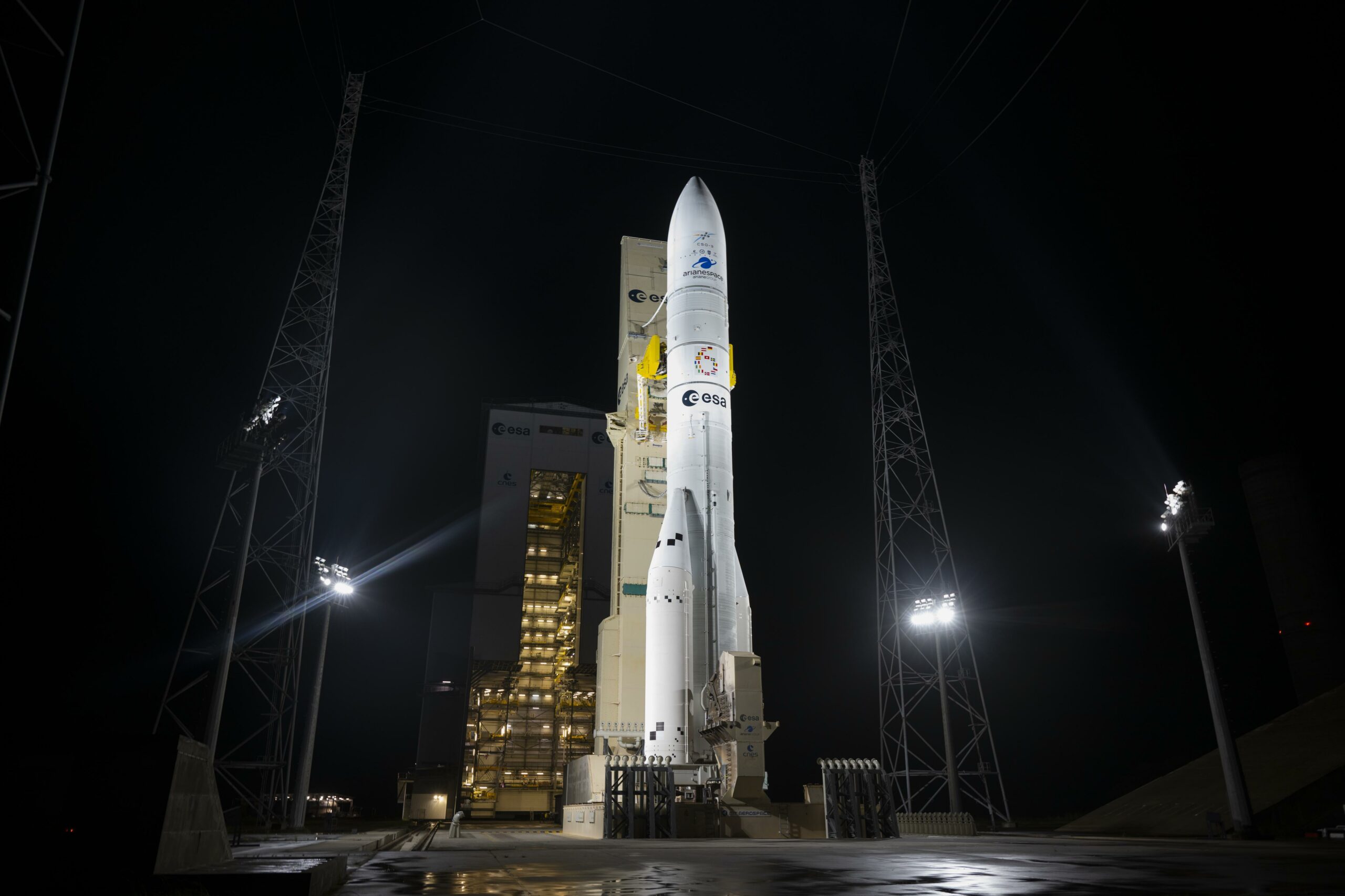
Ariane 6 successfully completed its second flight on March 6, 2025, marking its first commercial launch. The rocket lifted off from Europe’s Spaceport in French Guiana at 13:24 local time, carrying the CSO-3 satellite into orbit for the French military’s Space Command (CDE). Operated by Arianespace, this mission highlights Europe’s growing ambitions for independent space access and the capabilities of its new heavy launcher.
The launch successfully demonstrated all key phases, including the ignition of the Vinci engine and the Auxiliary Propulsion Unit (APU) used for re-entry. This mission further validated the upper stage’s design, which not only delivered the CSO-3 satellite into Sun-Synchronous Orbit but also ensured the deorbiting of the upper stage, preventing additional space debris.
ESA Director General Josef Aschbacher emphasized the importance of Ariane 6 for Europe’s space future, stating, “The second successful flight of Ariane 6 marks a significant milestone in Europe’s journey towards enhanced autonomous access to space.” He added that the launch signals a promising future for European space activities, with more launches planned for 2025.
Ariane 6’s versatility, with its modular design, allows it to handle a variety of missions, from low-Earth orbit to deep space, making it a critical component in ensuring autonomous access to space for Europe. The rocket’s ability to safely re-enter and avoid contributing to space debris further reinforces Europe’s commitment to responsible space operations.
ESA Director of Space Transportation, Toni Tolker-Nielsen, pointed out the rocket’s full potential, noting, “The upper stage also showed its full potential… reaffirming Europe’s commitment to minimise in-orbit space debris.”
Image credit: ESA