
Insider Brief
- Firefly Aerospace’s Blue Ghost lander successfully completed the first commercial lunar landing under NASA’s Commercial Lunar Payload Services (CLPS) program, delivering 10 science and technology instruments to the Moon.
- The lander, which touched down near Mons Latreille in Mare Crisium, will operate for about 14 Earth days, conducting experiments on lunar surface conditions, radiation tolerance, and navigation technologies.
- NASA’s CLPS program, with contracts worth up to $2.6 billion through 2028, aims to accelerate lunar research and establish a commercial supply chain for future Moon missions.
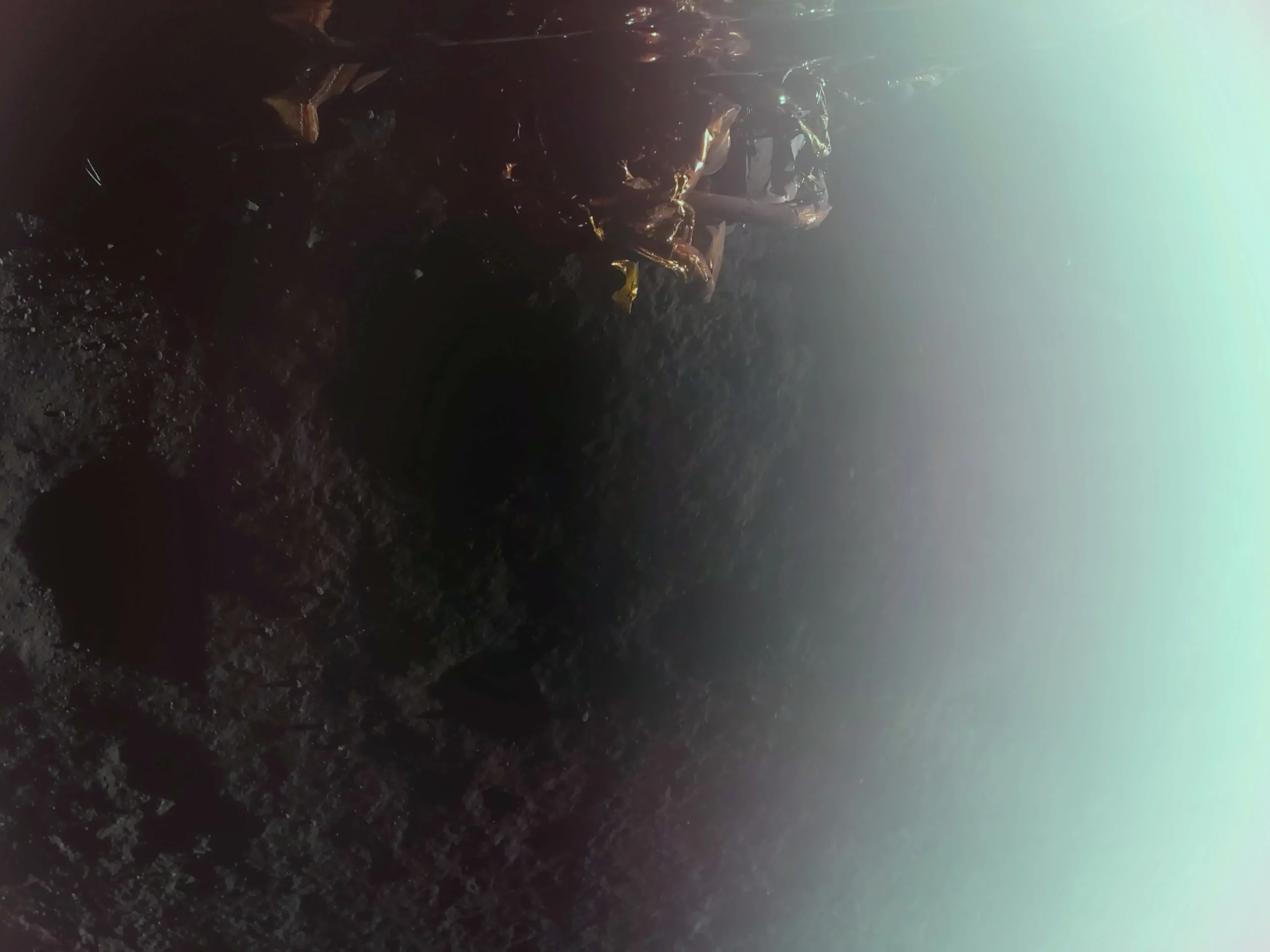
- Image: First image captured by Firefly’s Blue Ghost lunar lander, taken shortly after confirmation of a successful landing at Mare Crisium on the Moon’s near side. This is the second lunar delivery of NASA science and tech instruments as part of the agency’s Commercial Lunar Payload Services initiative. (Firefly Aerospace)
Firefly Aerospace’s Blue Ghost lander touched down on the Moon early Sunday, marking the first commercial lunar landing under NASA’s initiative to use private companies for space exploration, according to a NASA statement. The spacecraft, carrying 10 NASA science and technology instruments, landed in an upright and stable position near a volcanic feature called Mons Latreille in the Moon’s Mare Crisium basin.
The landing is part of NASA’s Commercial Lunar Payload Services (CLPS) program, which is meant to reduce costs and accelerate lunar research by contracting private companies to transport scientific instruments. Blue Ghost is Firefly’s first mission under CLPS and a step toward a growing lunar economy.
“This incredible achievement demonstrates how NASA and American companies are leading the way in space exploration for the benefit of all,” said NASA acting Administrator Janet Petro. “We have already learned many lessons – and the technological and science demonstrations onboard Firefly’s Blue Ghost Mission 1 will improve our ability to not only discover more science, but to ensure the safety of our spacecraft instruments for future human exploration – both in the short term and long term.”
Blue Ghost launched from Florida’s Kennedy Space Center on Jan. 15 and traveled more than 2.8 million miles before landing. Along the way, it transmitted 27 gigabytes of data and conducted science experiments, including testing a navigation system that showed Earth’s GPS technology can function at the Moon’s distance.
Last year, Houston-based Intuitive Machines’ Odysseus lander made a lopsided touchdown Reuters reported, landing mostly intact but dooming many of its onboard instruments.
The lander’s scientific payloads will operate for about 14 Earth days, or one lunar day. The instruments will study the Moon’s surface, measure radiation levels, test computing systems for deep space, and investigate how dust moves in lunar conditions. Data collected from the mission will help NASA plan future crewed missions and long-term lunar operations.
“The science and technology we send to the Moon now helps prepare the way for future NASA exploration and long-term human presence to inspire the world for generations to come,” said Nicky Fox, associate administrator for science at NASA Headquarters in Washington. “We’re sending these payloads by working with American companies – which supports a growing lunar economy.”
Among the payloads on board, the Lunar Magnetotelluric Sounder is measuring changes in the Moon’s magnetic field, while the Radiation-Tolerant Computer System is testing hardware designed to survive the harsh conditions of space. One instrument is drilling into the Moon’s regolith to analyze the composition of the soil.
The lander will also attempt to capture images of the lunar sunset and study how dust particles behave at dusk, a phenomenon first observed by Apollo 17 astronaut Eugene Cernan. The mission is expected to continue operating for several hours into the lunar night before shutting down.
“On behalf of our entire team, I want to thank NASA for entrusting Firefly as their lunar delivery provider,” said Jason Kim, CEO of Firefly Aerospace. “Blue Ghost’s successful Moon landing has laid the groundwork for the future of commercial exploration across cislunar space. We’re now looking forward to more than 14 days of surface operations to unlock even more science data that will have a substantial impact on future missions to the Moon and Mars.”
NASA has awarded contracts to five companies for 11 CLPS deliveries, sending more than 50 instruments to different parts of the Moon, including the lunar South Pole. The program’s contracts are valued at up to $2.6 billion through 2028.
By outsourcing lunar transportation, NASA aims to establish a supply chain that supports both scientific exploration and commercial development. The success of Blue Ghost’s mission strengthens the role of private companies in spaceflight and moves the agency closer to its goal of a sustained human presence on the Moon.
Learn more about NASA’s CLPS initiative at: https://www.nasa.gov/clps