Insider Brief
- Spaceium has successfully raised $6.3 million in an oversubscribed seed round led by Initialized Capital with participation from other investors, including Y Combinator, Zeno Ventures, and several angel investors.
- With this funding, Spaceium is preparing for its first demonstration mission and expanding its team to support further technological advancements. The company aims to establish refueling stations in orbits ranging from Low Earth Orbit (LEO) to destinations like the Moon and Mars, partnering with both government and commercial space programs along the way.
- With strong demand for fuel in space, Spaceium has already lined up multiple customers requiring significant amounts of propellant for their missions.
Spaceium, a startup aiming to revolutionize space exploration by creating a network of in-space refueling stations, has announced the company’s successful raise of $6.3 million in an oversubscribed seed round. Initialized Capital led the round, with participation from other investors including Y Combinator, Zeno Ventures, and several angel investors.
Founded by Ashi Dissanayake and Reza Fetanat, Spaceium is focused on addressing a key challenge in space missions—fuel. Current spacecraft are limited by the amount of fuel they can carry, restricting the number of operations they can perform once in space. Spaceium’s refueling stations will allow spacecraft to extend their operational lifespans, reduce launch costs, and increase payload capacity, making space missions more efficient and cost-effective.
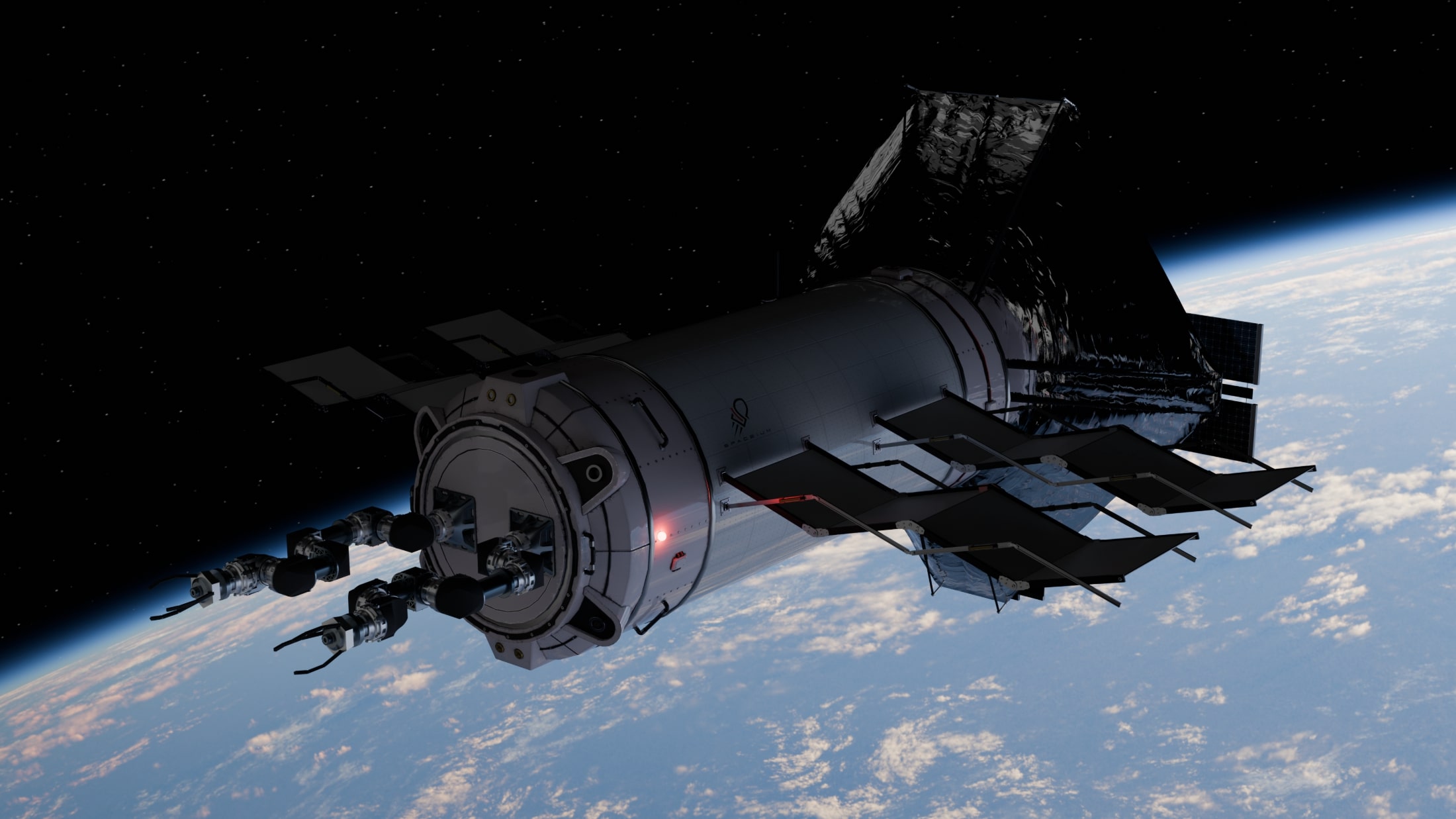
“Our technology will transform the economics of space,” says Dissanayake, who serves as CEO. “Enabling refueling in space allows spacecraft to conduct more operations, reduce the cost per mission, and ultimately open up new possibilities for human activity in space.” Spaceium’s technology includes proprietary fuel tanks capable of storing propellant in space for years and advanced robotic arms developed in-house for refueling operations.
The company plans to demonstrate its refueling technology in orbit in the coming years. With strong demand for fuel in space, Spaceium has already lined up multiple customers requiring significant amounts of propellant for their missions. The company’s refueling stations will be capable of handling multiple metric tons of fuel, making them a critical part of the future space infrastructure.
“Spaceium is pursuing a highly impactful solution,” says Andrew Sather, partner at Initialized Capital. “In-space refueling will significantly expand the capabilities of on-orbit assets, providing a sustainable way to keep spacecraft operational longer and more effectively.”
With this funding, Spaceium is preparing for its first demonstration mission and expanding its team to support further technological advancements. The company aims to establish refueling stations in orbits ranging from Low Earth Orbit (LEO) to destinations like the Moon and Mars, partnering with both government and commercial space programs along the way.
Image credit: Spaceium