
Insider Brief
- Impulse Space has secured a $34.5 million Small Business Innovation Research Phase III contract from the U.S. Space Force’s Space Systems Command.
- The contract, awarded in collaboration with the Defense Innovation Unit, supports two Tactically Responsive Space missions: VICTUS SURGO and VICTUS SALO.
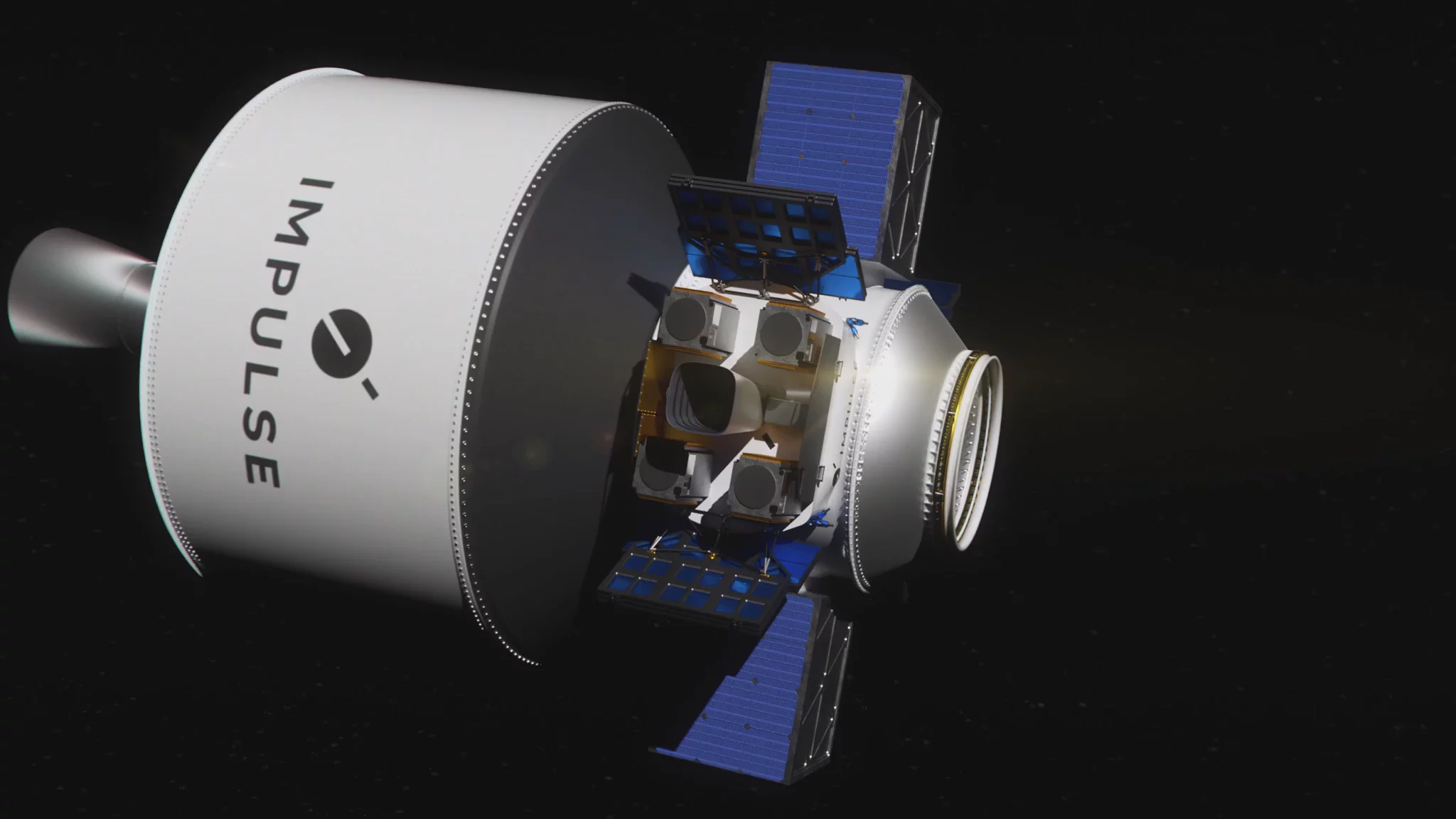
- Impulse Space will provide Mira vehicles for both missions which aim to enhance space domain awareness by demonstrating how prepositioned assets can respond quickly to on-orbit situations.
- The VICTUS missions are scheduled to launch in 2026.
Impulse Space announced it has secured a $34.5 million Small Business Innovation Research (SBIR) Phase III contract from the U.S. Space Force’s Space Systems Command (SSC). The contract, awarded in collaboration with the Defense Innovation Unit (DIU), supports two Tactically Responsive Space (TacRS) missions: VICTUS SURGO and VICTUS SALO.
These missions aim to enhance space domain awareness (SDA) by demonstrating how prepositioned assets can respond quickly to on-orbit situations. Impulse Space will play a critical role in the missions, providing Mira vehicles for both. VICTUS SURGO will see Mira transported to Geosynchronous Transfer Orbit (GTO) via a Helios kick stage after being launched into Low Earth Orbit (LEO) on a SpaceX Falcon 9 rocket. Additionally, Helios will deliver a rideshare payload to Geostationary Orbit (GEO) as part of a DIU demonstration. For VICTUS SALO, a Mira vehicle will operate in LEO, launched on a future SpaceX rideshare mission.
The Mira vehicles, equipped with high delta-v capability and six degrees of freedom (6DOF) control, are designed for agile in-space operations. The vehicles will use storable, nontoxic propellants and integrate Impulse’s in-house developed avionics, star trackers, flight software, and guidance, navigation, and control systems.
These demonstrations will not only support current TacRS needs but also help develop new tactics for dynamic space operations. Impulse Space’s CEO, Tom Mueller, emphasized the company’s commitment to delivering responsive space solutions, noting that this selection further strengthens Impulse’s role in advancing dual-use technologies for both commercial and military purposes.
The VICTUS missions are scheduled to launch in 2026.
Image credit: Impulse Space