
Insider Brief:
- Astranis has secured full funding for its next-generation Omega satellite program after closing a $200 million Series D round.
- The investment was led by Andreessen Horowitz’s a16z Growth Fund and co-led by Balyasny Asset Management with participation from Blackrock, Fidelity, and Baillie Gifford.
- The recently unveiled Omega satellites promise five times the bandwidth capacity of their predecessors, first-generation MicroGEO satellites, while maintaining a similar size.
- Astranis aims to have over 100 Omega satellites in orbit by 2030, with the first Omega satellite scheduled for launch in 2026.
Astranis has secured $200 million in Series D funding, fully backing its next-generation Omega satellite program. Andreessen Horowitz’s Growth Fund led the investment, with Balyasny Asset Management co-leading and participation from Blackrock, Fidelity, and Baillie Gifford.
The company specializes in small broadband communications satellites in geostationary orbit. Its first-generation MicroGEO satellites, deployed in the United States, Philippines, and Mexico, laid the groundwork for the Omega satellites unveiled in April.
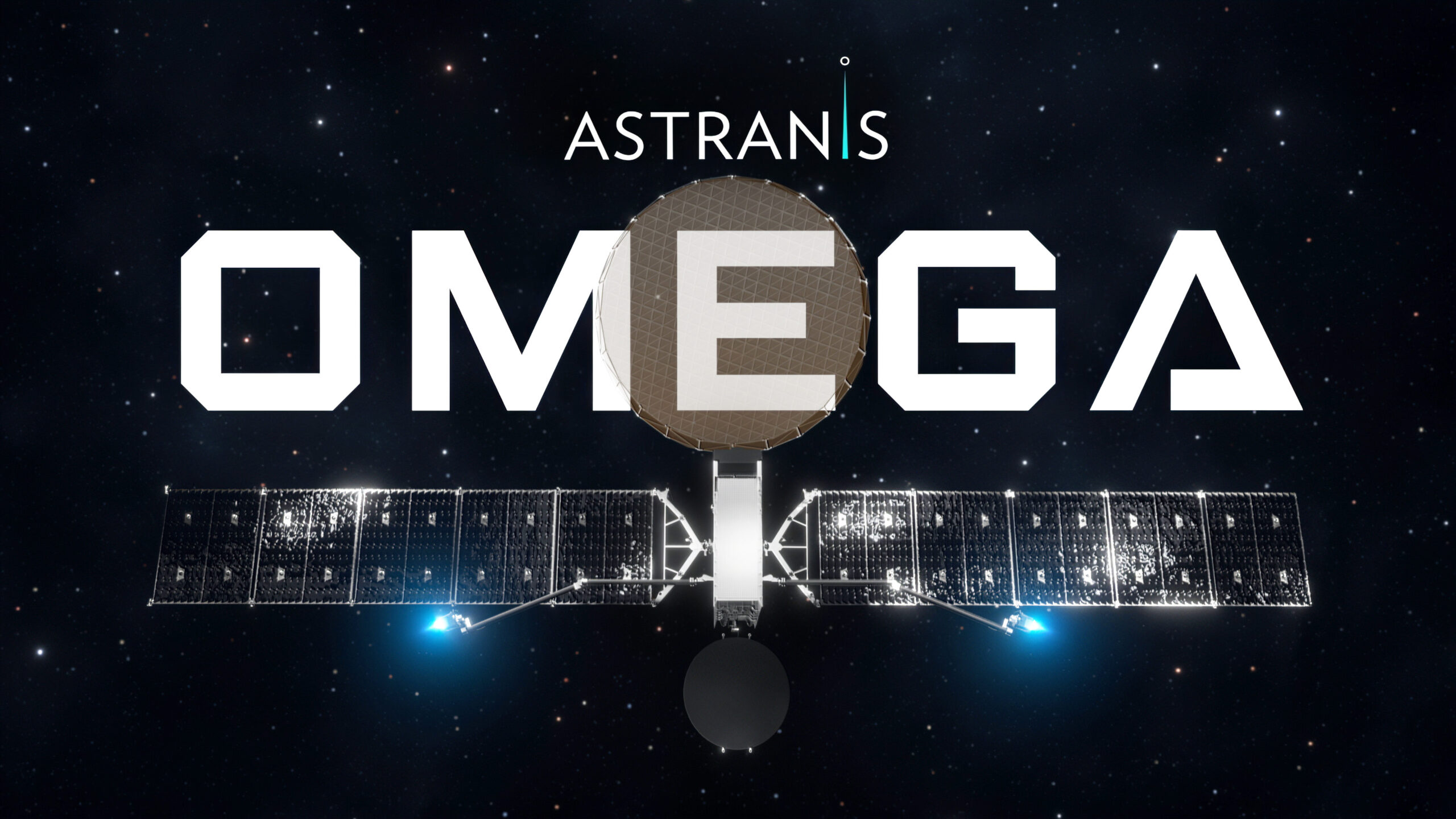
Omega satellites reportedly boast five times the bandwidth capacity of their predecessors while maintaining a similar size, thanks to a reduced power beam and a newly designed, larger reflector. The reflector unfolds to the size of a boxing ring in orbit after being compact during launch. These satellites also feature improved mechanical, thermal, and avionics systems, with an extended ten-year operational life.
Astranis aims to manufacture 24 Omega satellites annually by 2025, an unprecedented production rate for geostationary satellites. This accelerated pace stems from bringing about 70% of manufacturing in-house and moving to a new facility. Payton Case, an Astranis engineer, noted the company has focused on “taking the arts and crafts out of satellite manufacturing and transitioning it towards design for manufacturing at a mass scale.”
Astranis plans to launch its first Omega satellite in 2026 and targets over 100 Omega satellites in orbit by 2030.
Image credit: Astranis