
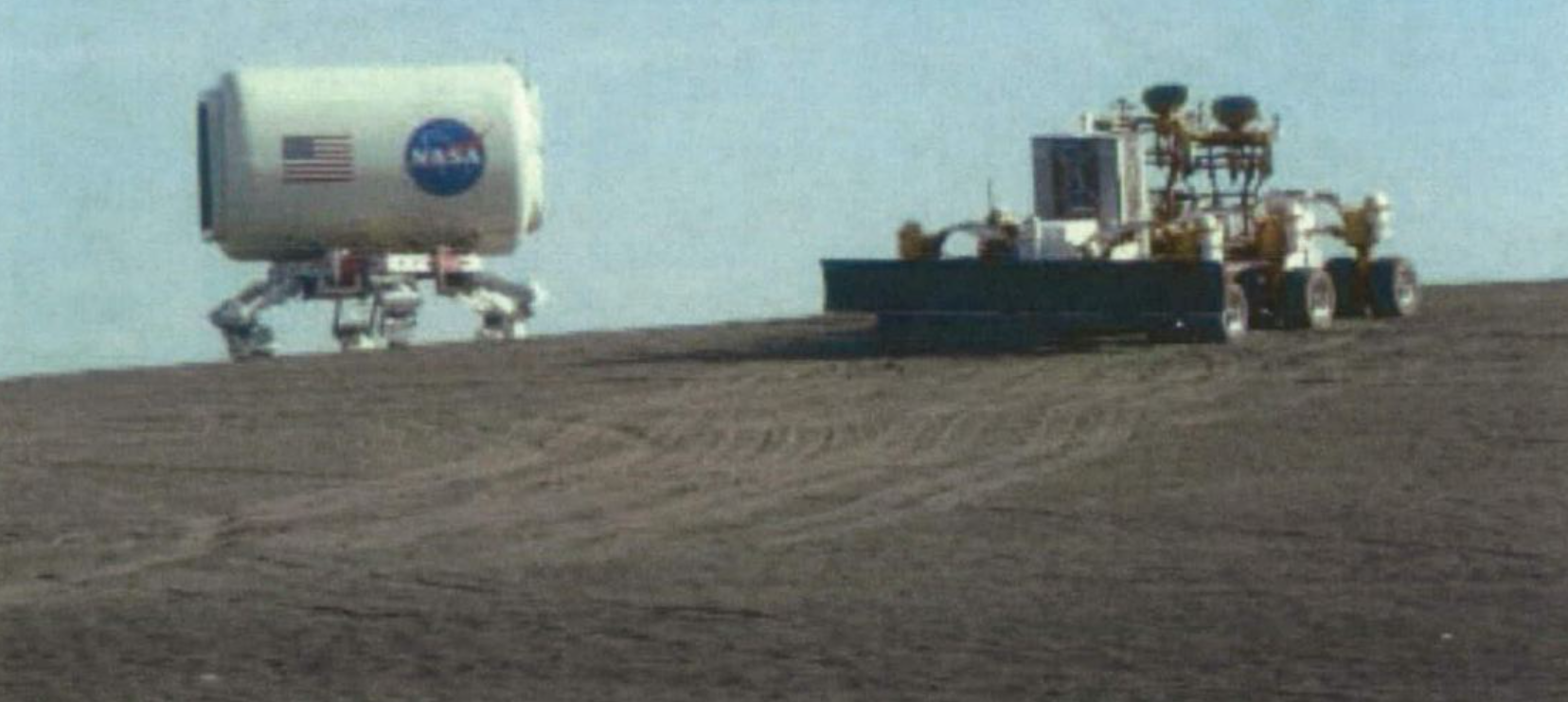
Moving large amounts of regolith is essential for long-term missions to the Moon or Mars. Traditional systems have only managed small amounts of soil for sample collection. Sending a heavy excavator is cost-prohibitive, so an interdisciplinary team from NASA and the Colorado School of Mines devised the Lunar Attachment Node for Construction and Excavation (LANCE), a bulldozer attachment for NASA’s Chariot rover prototype.
LANCE is designed specifically for lunar use, with an aluminum frame and a carbon fibre composite moldboard to meet weight restrictions. Engineers modelled the expected forces on the blade during activities like building roads and landing pads and tested the prototype at a natural site in Moses Lake, Washington. This location’s cohesive silt, similar to lunar regolith, provided an ideal testing ground.
During testing, LANCE successfully levelled a 25m x 25m area and constructed berms, highlighting the importance of operator efficiency. However, lunar conditions, such as electrostatically charged regolith and lower gravity, pose unique challenges.
While it remains uncertain if LANCE will be used in the Artemis missions, its development indicates the feasibility of using a lightweight, flexible rover attachment to build the necessary lunar infrastructure.
Featured image: Credit: NASA