
Insider Brief:
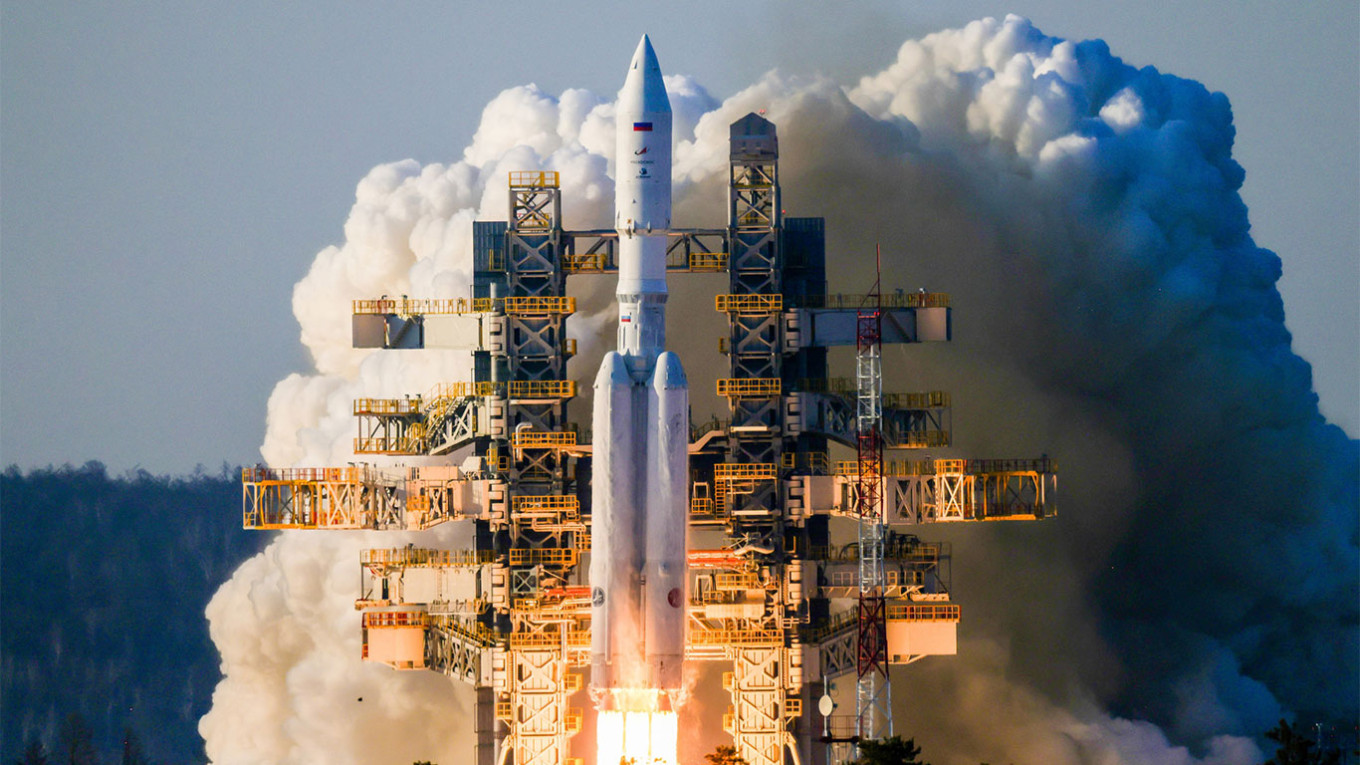
- Russia has successfully test-launched its Angara-A5 space rocket from the Vostochny Cosmodrome in the Far East.
- The rocket reached speeds of over 25,000 kilometres per hour and placed a test load into low orbit.
- The 54.5-meter three-stage rocket, weighing about 773 tonnes, is capable of carrying approximately 24.5 tonnes into space and is slated to replace the aging Proton M rocket.
- Image credit: The Moscow Times
Russia test-launched its Angara-A5 space rocket from the Vostochny Cosmodrome in the Far East. After two aborted attempts earlier last week due to technical issues, Russian space officials achieved success on Thursday, just in time for Cosmonaut Day celebrations on April 12 as reported by Reuters. The rocket reached speeds of over 25,000 kilometres per hour and placed a test load into low orbit.
The 54.5-meter three-stage rocket, weighing about 773 tonnes, is capable of carrying approximately 24.5 tonnes into space. Developed with a focus on using only Russian components and environmentally friendly fuel, the Angara-A5 is slated to replace the aging Proton M rocket, which has been in service since the 1960s and is aimed at developing a new post-Soviet launch vehicle.
Roscosmos, Russia’s space agency, has prioritized the Angara project deeming it of great national importance, providing the country with independent access to space. The successful launch initiates flight design tests of the Amur space rocket complex with Angara heavy-class launch vehicles from Vostochny.
The Angara-A5 project began in the aftermath of the Soviet Union’s dissolution in 1991, to ensure Russia’s access to space without reliance on facilities like the Baikonur Cosmodrome in Kazakhstan. Previous test flights from Plesetsk in northern Russia in 2014 and 2020 paved the way for this successful launch from Vostochny.